Open Food Facts is our first Yuka alternative for food-label lookups. EWG Healthy Living is the closer comparison for ingredient assessments across personal care, food and cleaning. If you mainly need offline scanning or search without a barcode, check Yuka Premium before switching apps.
Choice handles a different question: company conduct while you browse. We make Choice and publish this guide, so that relationship is explicit. The comparisons below use published features and methods; we have not run an independent database-accuracy trial.
Choose by the job you need done
| Tool | Main job | Free and paid features |
|---|---|---|
| Yuka | Food and cosmetics scans with product assessments | Free core app; Premium adds offline mode and search without scanning |
| Open Food Facts | Food ingredients, nutrition information and label data | Free, open-source app and open database |
| EWG Healthy Living | Ingredient assessments for personal care, food and cleaning | Free core features and search; Premium adds comparison and preference tools |
| Choice | Sourced company actions on supported websites | Free browser extension; no account or paid tier |
Open Food Facts: start here for the food data
Open Food Facts supports barcode lookups, ingredients, nutrition information and contributions from its community. Its open database is the strongest reason to investigate it if you want to see or help improve the underlying product record.
Start by scanning food you buy often. Match the market, serving size and ingredients to the package. Open Food Facts is most relevant to packaged food with a label you can compare.
If a record is missing or old, that tells you something about coverage. It does not establish that the food is good or bad. The same applies when the manufacturer has changed a recipe since the label photo was added.
EWG: the broader ingredient lookup
EWG Healthy Living covers personal care, food and cleaning products. Its assessments consider ingredients, available science and transparency under EWG's method.
Core features and search are free. Premium adds side-by-side comparisons, ingredient preferences and deeper ingredient insights. Check the subscription offer in your region before assuming a feature shown in promotional screenshots is included for free.
Use the explanation behind a score. An ingredient concern is not a personalized prediction that a particular product will harm you, and an app result does not replace advice about an allergy or prescribed treatment. Product identification and the method behind the rating still matter.
Yuka Premium may already solve the problem
Yuka's Premium page lists offline scanning, search without scanning a barcode, food-preference alerts and unlimited history. It displayed $15 per year when checked October 29, 2026. Use the offer shown in your own app or checkout for the price and renewal terms that apply to you.
If your frustration is losing signal in a shop, offline mode is a relevant feature to compare. If it is coverage of the products you buy, paying for an extra feature does not by itself prove those records are present or current.
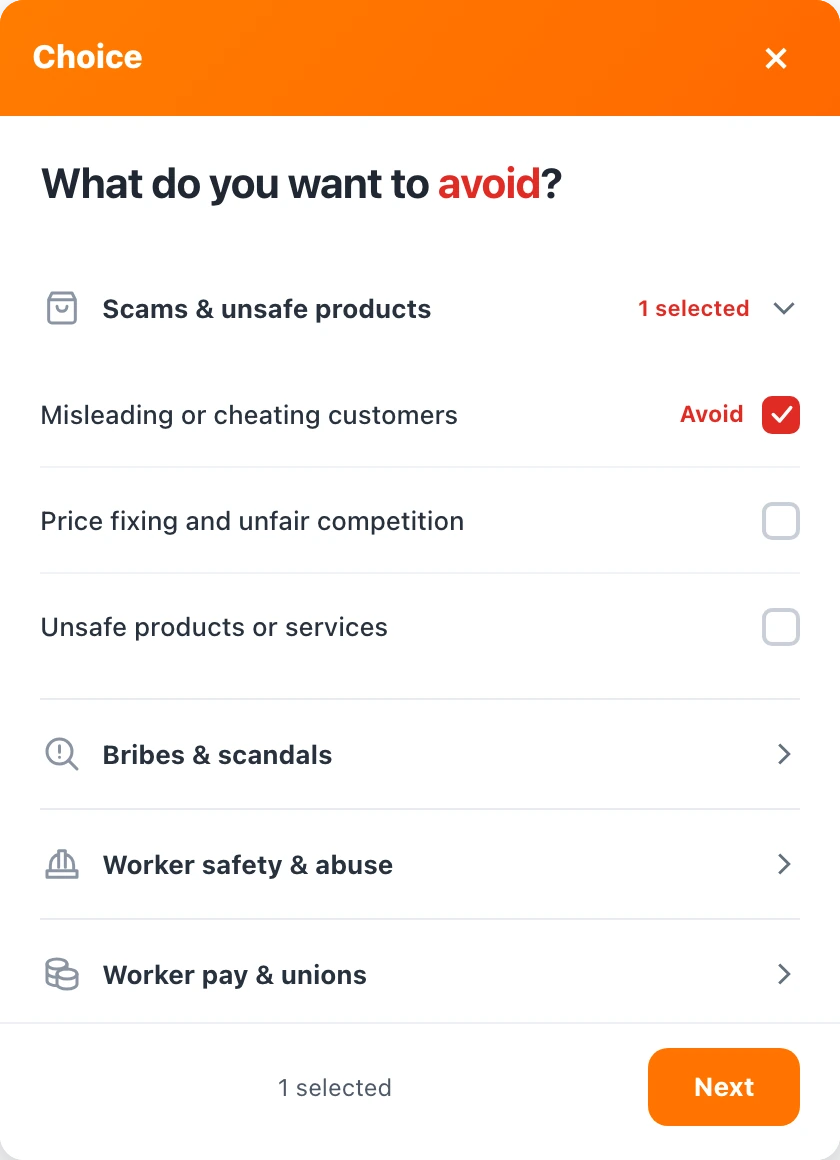
Choice adds the company check
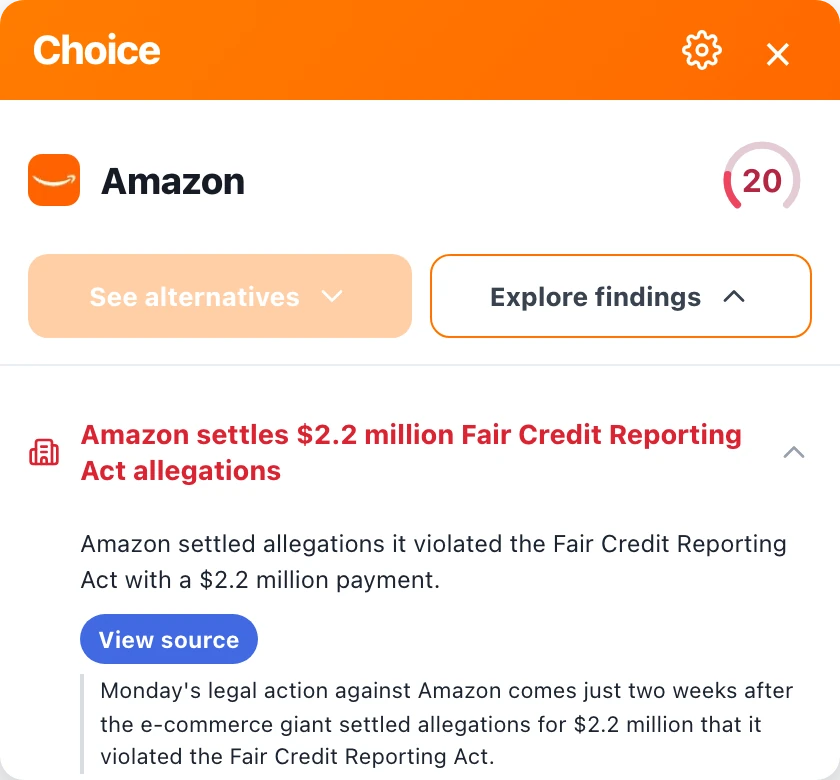
The Choice listing describes sourced company actions, warnings based on your selected preferences and alternatives for covered companies. It does not scan a shampoo's ingredients or give a snack a nutrition score.
A useful combination is one product-label tool plus a company check where your concern involves the maker or seller. For animal testing specifically, the certification directory route is more direct than trying to infer a policy from an ingredient score.
Why the same item can produce different results
Confirm that both tools found the same formula first. Similar packaging, a regional version or an old entry can create a mismatch before the scoring method is even involved.
Then ask what the product scores measure. Nutrition, ingredient concerns and company behavior are different subjects. Two numbers beside the same product name may answer entirely different questions.
Open the supporting explanation and its date. A color-coded result is convenient for scanning a shelf, but the evidence is what lets you decide whether the result should change the purchase.
Try three familiar products before subscribing
Choose items you regularly buy and check three things in each app:
- Does it find the exact product and current formula?
- Does the explanation answer your question?
- Is the useful feature free, or what would you pay for it?
Our starting recommendation is Open Food Facts for food data, EWG for broader ingredient assessments, and Yuka Premium if its specific extra feature is what you need. Add Choice when the unresolved question concerns the company behind the purchase.
Sources
Yuka. The Mobile App That Scans Your Products. https://yuka.io/en/. Accessed on October 28, 2026.
Open Food Facts. Get the Open Food Facts app. https://openfoodfacts.github.io/smoothielanding/. Accessed on October 28, 2026.
Environmental Working Group. Healthy Living App. https://www.ewg.org/apps/?gad=1. Accessed on October 28, 2026.
Choice. Choice — Ethical Shopping & Company Values. https://chromewebstore.google.com/detail/choice-%E2%80%94-ethical-shopping/kgdoijfopjgnnjlbbmkdlcdkaaefighc. Accessed on October 28, 2026.
Open Food Facts. Mobile App Documentation. https://openfoodfacts.github.io/smooth-app/. Accessed on October 28, 2026.
Yuka. Premium Member. https://yuka.io/en/premium-member/. Accessed on October 28, 2026.